
Data Analysis – Survey Report Overview
The following report consists of the data analysis for the survey conducted on 2157 weavers from multiple regions of Assam namely Sualkuchi, Sanpara, Bangsar, and Hahim. All the analysis, pie charts, sections, as well as overall interpretations have been added for the reference of the reader.
Process
For the purpose of the study, a survey containing 61 questions divided into six subsections namely Demographic Data, Design Modifications, Dyeing Process, Ergonomics, Technological, and Counseling was conducted on a total of 2157 weavers from different regions of Assam (Sualkuchi, Sanpara, Bangsar, Hahim).
Once the survey was done, data of recorded responses was reviewed to
figure the extent of quantitative analysis, measures of central
tendency and variability were finalized. Microsoft Excel was used as
the primary tool for data handling, as it supports the analysis of
numerical data. All collected data were systematically coded and
organized within Excel for further analysis.
The link to the coded dataset is provided for reference (🔗link) and
also the link for combined data (🔗combined data). The data of
responses from 4 different clusters of villages were combined and
then coded, except certain data was rejected due to absence of
responses, rest was combined and coded then analysis was initiated.
Depending upon the scales of the choices available for a question,
scoring was done to aid in analysis. Once the data was coded, it was
put through the software and data tables as well as pie charts were
created. The interpretation of the same is as follows:
Note: The following survey responses are compiled from the actual inputs provided by weavers. The data have been visually represented using pie charts. Responses that could not be effectively illustrated through pie charts are presented in tabular form following the respective charts.
Section 1: Demographic Details
Age
The maximum age out of 1057 respondents was 71 and the minimum age was 18.
Gender
The majority of handloom weavers were female, with 89.2% women and 10.8% male.
Section 2: Design Modification
What are the main problems faced by handloom sectors?
The responses indicate that more than half of the sample is dealing with the common problem of rising yarn prices, which has an impact on economic stability, social structure, and cultural heritage. Other major issues include a lack of capital for infrastructure and intense competition from auto loom products, which have a negative impact on Assam's handloom sector by reducing production efficiency, compromising product quality, and limiting market access.
These challenges reduce competitiveness and market share, reducing
the cultural and economic value of handloom products. To address the
challenges in the handloom sector, the government could subsidize
yarn prices to keep costs stable for weavers.
Microfinance schemes and low-interest loans would provide the
capital required for infrastructure improvements. Also, offering
skill development programs would improve weaving techniques, design
innovation, and business skills, thereby increasing productivity and
product quality.
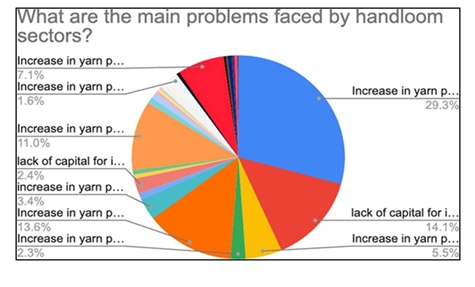
Detailed Response Distribution
| Content | Percentage (%) |
|---|---|
| Increase in yarn price | 27.98 |
| Lack of capital for infrastructure | 13.46 |
| Increase in yarn price, Competition with auto loom products | 5.30 |
| Increase in yarn price, Lack of capital for infrastructure | 2.18 |
| Increase in yarn price, Competition with auto loom products, Lack of capital for infrastructure | 12.97 |
| Increase in yarn price | 3.21 |
| Lack of capital for infrastructure, Marketing, Product Design | 1.03 |
| Lack of capital for infrastructure, Marketing | 2.32 |
| Marketing | 0.62 |
| Competition with auto loom products, Lack of capital for infrastructure, Marketing | 0.71 |
| Increase in yarn price, Competition with auto loom products, Lack of capital for infrastructure, Marketing | 10.47 |
| Competition with auto loom products | 0.94 |
| Competition with auto loom products, Lack of capital for infrastructure | 0.98 |
| Increase in yarn price, Marketing | 0.40 |
| Increase in yarn price, Marketing, Product Design | 0.36 |
| Increase in yarn price, Any other | 0.04 |
| Increase in yarn price, Competition with auto loom products, Marketing | 0.18 |
| Competition with auto loom products, Lack of capital for infrastructure, Marketing, Product Design | 0.13 |
| Increase in yarn price, Lack of capital for infrastructure, Marketing | 4.90 |
| Increase in yarn price, Competition with auto loom products, Lack of capital for infrastructure, Product Design | 0.22 |
| Competition with auto loom products, Marketing | 0.09 |
| Increase in yarn price, Competition with auto loom products, Marketing, Product Design | 0.22 |
| Marketing, Product Design | 0.45 |
| Increase in yarn price, Competition with auto loom products, Lack of capital for infrastructure, Marketing, Product Design | 1.51 |
| Increase in yarn price, Competition with auto loom products, Lack of capital for infrastructure, Marketing, Product Design, Any other | 0.04 |
| Lack of capital for infrastructure, Marketing, Any other | 0.04 |
| Increase in yarn price, Lack of capital for infrastructure, Marketing, Product Design | 0.09 |
| Increase in yarn price, Any other | 0.31 |
| Increase in yarn practice | 6.77 |
| Competition with auto loom products | 0.31 |
| Any other | 0.22 |
| N/A | 0.04 |
| Increase in yarn practice, Lack of capital for infrastructure | 0.62 |
| Increase in yarn practice, Competition with auto loom products, Lack of capital for infrastructure | 0.40 |
| Increase in yarn practice, Marketing | 0.40 |
| Increase in yarn practice, Competition with auto loom products | 0.13 |
What are the major technical problems faced by handloom weavers?
In Assam's textile industry, a lack of ergonomic considerations causes physical strain and long-term health problems for handloom weavers, lowering productivity and weaving quality. Furthermore, the lack of spare parts is a common technical issue, resulting in increased absenteeism and lower morale, further disrupting production.
These challenges pose a threat to the handloom sector’s long-term viability and growth, resulting in frequent downtime, inefficiencies, and loss of productivity and income. Poor maintenance due to lack of spare parts reduces product quality and accelerates machinery wear and tear.
To address these issues, Assam's textile industry should prioritize ergonomic improvements in handloom design to reduce physical strain and health risks for weavers. Creating a reliable supply chain for spare parts would reduce downtime and improve equipment maintenance. Furthermore, implementing regular health and safety training and providing access to healthcare services can improve weaver well-being and efficiency.These measures would help to improve product quality, reduce inefficiencies, and ensure the sector's long-term viability and growth.
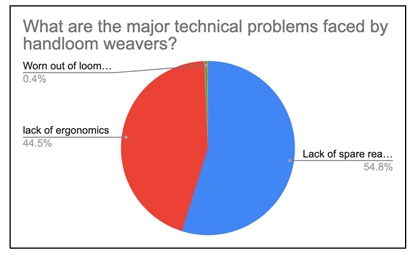
| What are the major technical problems faced by handloom weavers? | Percentage (%) |
|---|---|
| Worn out of loom due to prolonged working | 0.4 |
| Lack of ergonomics | 44.7 |
| Lack of spare readily available | 54.8 |
| Any other | 0.1 |
What are the major health issues the handloom weavers are facing?
The analysis of health issues experienced by handloom weavers in Assam indicates that musculoskeletal problems; particularly back pain, knee pain, and joint pain are the most prevalent, reported by 94.14% of respondents, underscoring the intense physical demands and prolonged postural strain inherent in weaving activities. Although reported at lower levels, noise-induced hearing loss and upper respiratory infections remain important occupational health concerns, affecting 3.56% and 2.18% of the weavers, respectively. Together, these findings highlight the urgent need for targeted ergonomic interventions, improved workplace conditions, and appropriate health support measures to mitigate musculoskeletal stress, reduce noise exposure, and minimize respiratory risks among handloom workers.
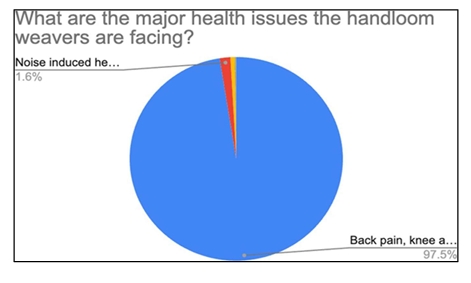
| What are the major health issues the handloom weavers are facing? | Percentage |
|---|---|
| Noise-induced hearing loss | 1.6 |
| Upper respiratory infections (URI) | 0.6 |
| N/A | 0.3 |
| Back pain, knee pain, and joint pain | 97.5 |
What are the problems in the preparatory processes (Yarn preparation before weaving)?
According to the data, improper winding and warping are the major causes of disruptions in the preparatory processes of weaving. These issues lead to poor fabric quality, frequent thread breakages, increased material wastage, and higher labor involvement during production. Such inefficiencies not only raise operational costs but also reduce overall weaving productivity and efficiency. In addition, they affect fabric consistency and uniformity, which ultimately impacts the market competitiveness of handloom products and lowers customer satisfaction. Therefore, addressing problems related to winding and warping is critical for the sustainability, productivity, and economic viability of the traditional handloom industry.
To overcome the problems associated with improper winding and warping, the handloom industry should focus on training programs that enhance weavers’ skills in these preparatory processes. Furthermore, the use of better-quality equipment and adherence to standardized procedures can help minimize thread breakage, reduce material waste, and lower labor costs without compromising production efficiency.
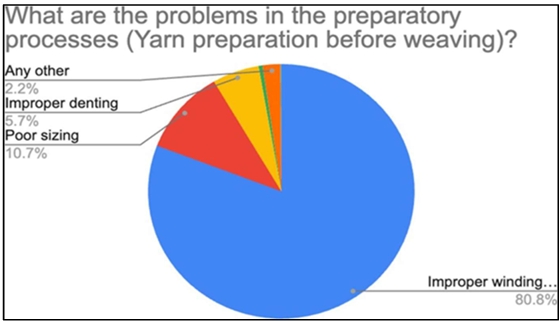
| What are the problems in the preparatory processes (Yarn preparation before weaving)? | Percentage |
|---|---|
| Improper winding & warping | 80.8 |
| Poor sizing | 10.7 |
| Improper denting | 5.7 |
| N/A | 0.6 |
| Any other | 2.2 |
SECTION 3: Dyeing Processes
What are the dyes you use in the dyeing of yarns?
In Assam’s diverse handloom industry, the choice of dyes varies significantly across regions and weaving communities. Many weavers continue to prefer natural and direct dyes derived from plants and minerals due to their environmental sustainability, traditional relevance, and strong cultural significance. At the same time, a considerable number of weavers opt for reactive dyes, mainly because of their wide shade range, vibrant colors, and excellent colorfastness properties, resulting from the chemical bonding between the dye molecules and the fiber. This parallel use of different dye systems reflects a balanced integration of traditional, eco-friendly practices with modern dyeing technologies. Such an approach enables the industry to cater to varied consumer preferences and market demands while still preserving and promoting Assam’s rich textile heritage.
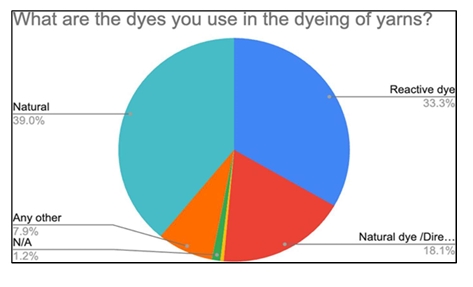
| What are the dyes you use in the dyeing of yarns? | Percentage |
|---|---|
| Natural | 39 |
| Reactive dye | 33.3 |
| Natural dye /Direct dye | 18.1 |
| N/A | 1.2 |
| Synthetic | 0.5 |
| Any other | 7.9 |
Which form of textile do you get for dyeing?
The high frequency of yarn as a response confirms that yarn dyeing is the primary activity among the surveyed weavers, suggesting that their processes and preparations are largely centered around handling and dyeing yarn. This insight can be critical for resource allocation, training, and improving dyeing processes tailored to yarn.
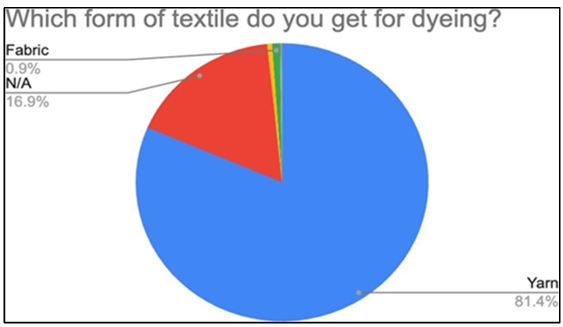
| Which form of textile do you get for dyeing? | Percentage |
|---|---|
| Fabric | 1.1 |
| N/A | 17 |
| Yarn | 81.4 |
| Fibre | 0.5 |
Impact of current lighting conditions on productivity
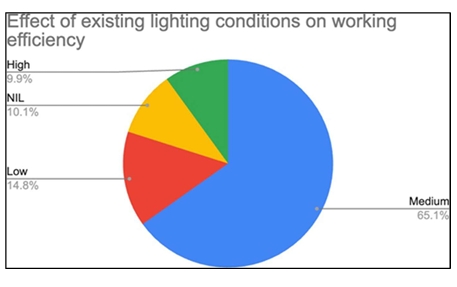
The handloom weavers predominantly rate the effect of existing lighting conditions on their working efficiency as "Medium".
What kind of dyes are you using?
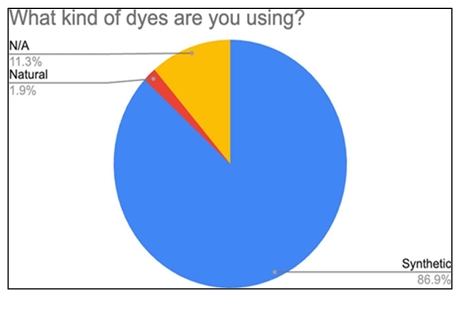
The data show a predominant use of synthetic dyes account for approximately 97.89% of the responses. This demonstrates a strong preference for synthetic dyes in the given context, with natural dyes being used sparingly. Synthetic dyes are preferred in the handloom sector due to their cost-effectiveness, consistent and predictable colors, wider range of shades, better color fastness, ease of use, and availability.
These advantages simplify the dyeing process, enhance product quality, and offer economic benefits to weavers. However, despite these benefits, there is a growing interest in natural dyes for their environmental sustainability and unique aesthetic qualities.
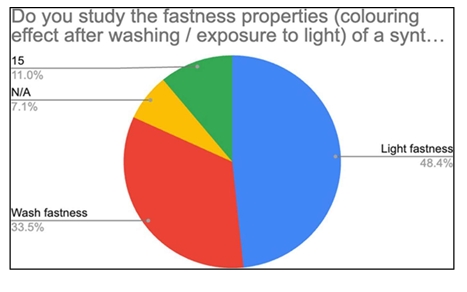
Do you study the fastness properties (coloring effect after washing / exposure to light) of a synthetic / natural dyed fabric?
According to the data, the vast majority of responses (approximately 84.62%) indicate a desire to investigate light fastness properties. This suggests that the participants are particularly interested in the light fastness properties of synthetic/natural dyed fabrics.
In the handloom sector, light fastness is often preferred over wash fastness because handloom products are typically used in settings where they are exposed to light for extended periods, such as in home furnishings, curtains, and traditional garments.
Ensuring that the colors remain vibrant and do not fade when exposed to sunlight is crucial for maintaining the aesthetic appeal and longevity of these products. While wash fastness is also important, the primary concern for many handloom items is their ability to retain color when exposed to light, making light fastness a key factor in their durability and marketability.
How do you check or evaluate the shade or color value of dyed fabric?
The data indicates that an overwhelming majority of weavers in Assam assess the shade or color value of dyed fabrics through visual evaluation, while only a very small percentage rely on machines for this purpose.
This trend suggests a strong preference for visual assessment among the participants, implying that it is the most trusted and widely adopted method for evaluating color accuracy and shade consistency.
It also predominantly highlights the continued importance of human judgment and experience in the quality control processes followed within the handloom sector.
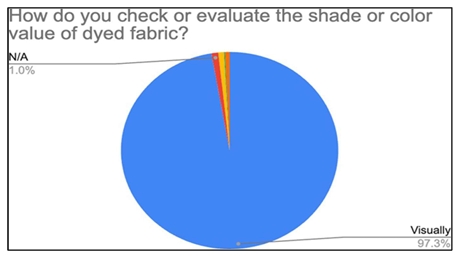
| How do you check or evaluate the shade or color value of dyed fabric? | Percentage |
|---|---|
| Visually | 97.3 |
| N/A | 1.7 |
| In machines | 0.8 |
| Prepared shade cards | 0.2 |
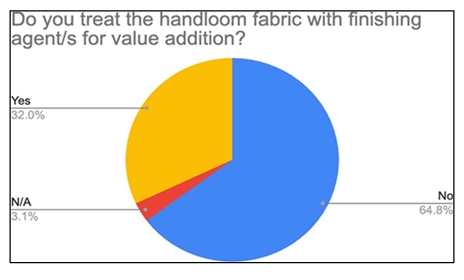
Do you treat the handloom fabric with finishing agent/s for value addition?
The data suggests that certain regions of Assam prefer to treat
handloom fabrics with finishing agents for value addition, while
other regions do not follow this practice. The application of
finishing agents varies across the state due to differences in local
market demand, traditional production practices, economic
conditions, and availability of resources.
In some areas, there is higher demand for finished fabrics along
with better access to materials, infrastructure, and technical
support, encouraging the use of finishing treatments. In contrast,
other regions continue to rely on traditional methods or face
economic and infrastructural limitations that restrict the adoption
of finishing agents. This variation highlights the diverse economic,
cultural, and practical conditions that characterize different
segments of Assam’s handloom sector.
SECTION 4: Ergonomics
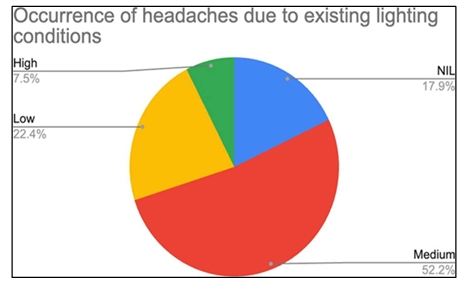
Occurrence of headaches due to existing lighting conditions
Based on the data provided regarding the occurrence of headaches in relation to current lighting conditions, it is clear that the majority of cases fall into the Medium and High categories. This suggests a moderate to slightly higher prevalence of headaches at these lighting levels.
The variability in occurrences across different observations suggests that lighting conditions, particularly those on the higher end of the scale, may influence headache frequency among people exposed to these environments.
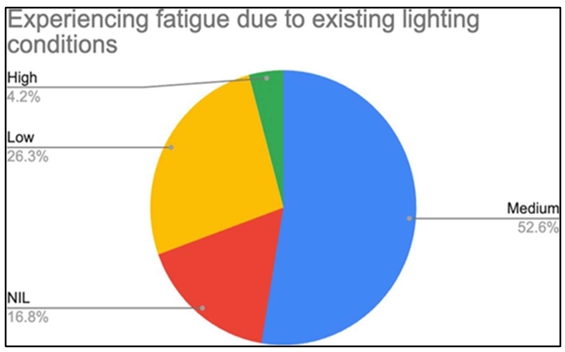
Experiencing fatigue due to existing lighting conditions
Based on the data on fatigue experienced under existing lighting conditions, a consistent pattern of discomfort is observed predominantly within the medium range, with occasional variations toward slightly higher or lower levels. This trend indicates that individuals frequently experience noticeable fatigue under the prevailing lighting conditions.
Furthermore, the presence of fatigue even at the lower end of the scale suggests that relatively reduced lighting intensities may also contribute to fatigue-related symptoms, highlighting the need for improved and more appropriate lighting conditions.
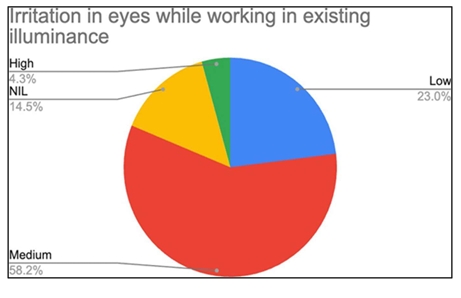
Eye Strain from working in the current level of lighting
The majority of handloom weavers rate the eye strain caused by working in the current level of lighting as "Medium". The current lighting conditions are generally regarded as adequate, but could be improved further to reduce eye strain.
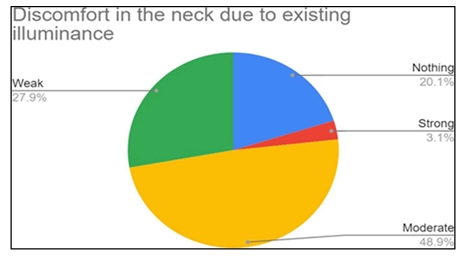
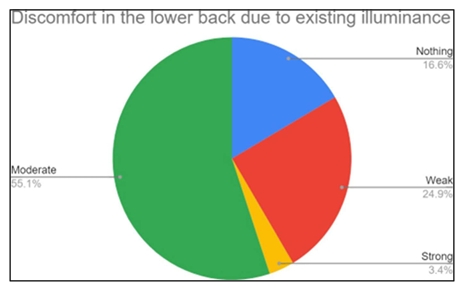
Discomfort in the neck/lower back/thighs/waist/ankles feet/shoulders due to existing lighting
The majority of handloom weavers rate the eye strain caused by working in the current level of lighting as "Medium". The current lighting conditions are generally regarded as adequate, but could be improved further to reduce eye strain.
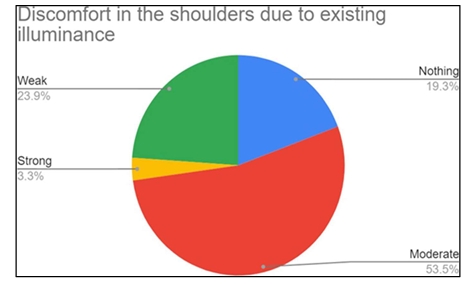
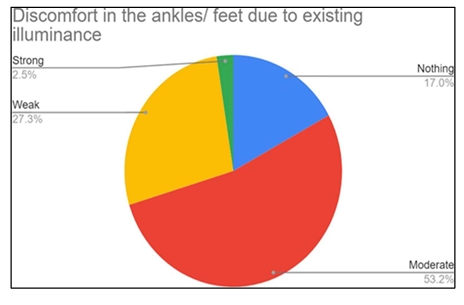
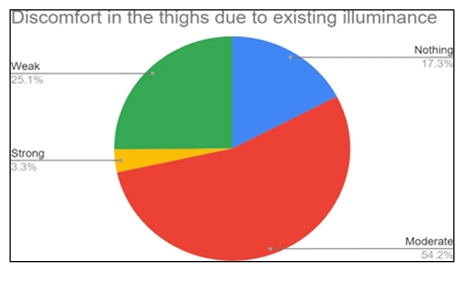
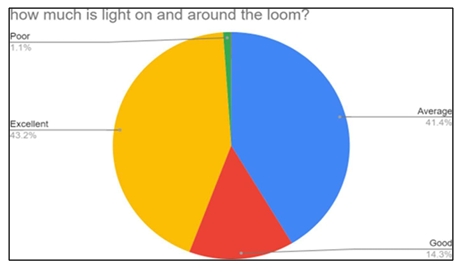
How much is light on and around the loom?
Handloom weavers generally rate the light on and around the loom as "Average". The current lighting conditions on and around the loom are generally adequate, but could be improved to move perceptions closer to "Good" or "Excellent".
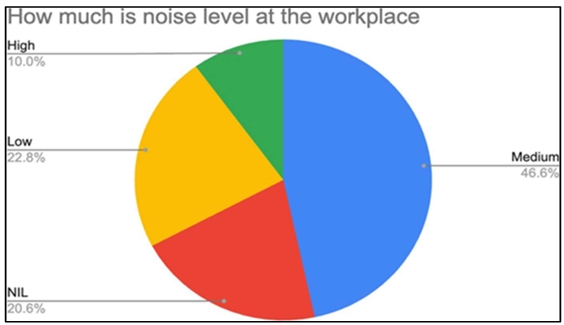
How much is the noise level at the workplace?
The data is predominantly in the Medium and Low ranges, indicating that noise levels at work are generally perceived as moderate, with some instances of lower noise levels. This is consistent with typical office or working environment noise levels, which can vary but generally remain within acceptable limits. Adjustments to noise management or soundproofing could potentially improve conditions further, depending on specific job requirements and employee preferences.
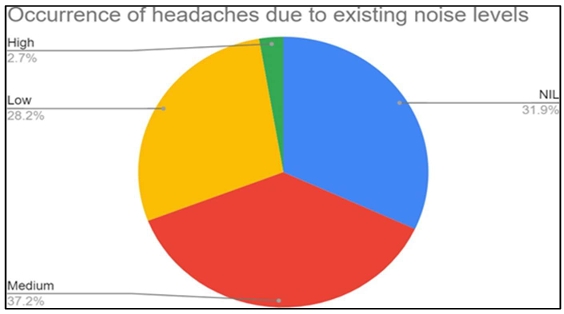
Occurrence of headaches due to existing noise levels
According to the data, while noise levels are moderate, the occurrence of headaches varies, with some respondents experiencing none and others experiencing them moderately. This means that, even if the noise is not excessively loud, it still causes some people to feel uncomfortable. Addressing noise reduction strategies has the potential to alleviate these issues even further.
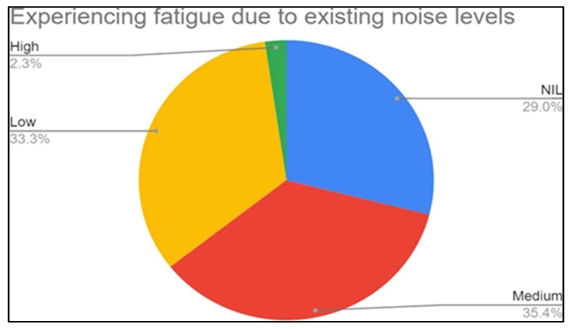
Experiencing fatigue due to existing noise levels
The data suggests that the majority of respondents experience a low occurrence of fatigue due to existing noise levels. This indicates that noise levels are generally manageable for most individuals in the workplace, with only occasional reports in the medium category. There were no reports of high occurrence or instances where noise levels did not lead to fatigue. This distribution suggests that overall, noise levels are not severely impacting fatigue among the respondents.
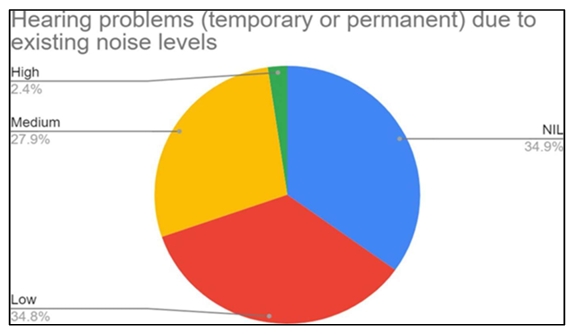
Hearing problems (temporary or permanent) due to existing noise levels
The data suggests that hearing problems caused by existing noise levels (temporary or permanent) are quite common among respondents. The high frequency of responses coded as and suggests that a large number of people face such problems. This could imply that noise levels in the environment are a major contributor to hearing problems in the surveyed population.
Degree of the impact of existing noise levels on working efficiency
The data suggests that while the average impact of noise levels on working efficiency is low, a significant portion of the weavers experience a medium level of impact. The most frequent response being low indicates that many weavers do not see noise levels as a major hindrance to their efficiency, but there is still a noticeable group that does feel moderately affected.
SECTION 5: Technological
What type of defects are the most common in handloom fabrics?
The prevalence of yarn breakage/snags and uneven dyeing/shading in Assam's handloom sector poses significant challenges, affecting product quality, productivity, competitiveness, and market perception. These defects not only undermine the sector's ability to deliver high-quality textiles but also increase production costs and hinder artisan skill utilization.
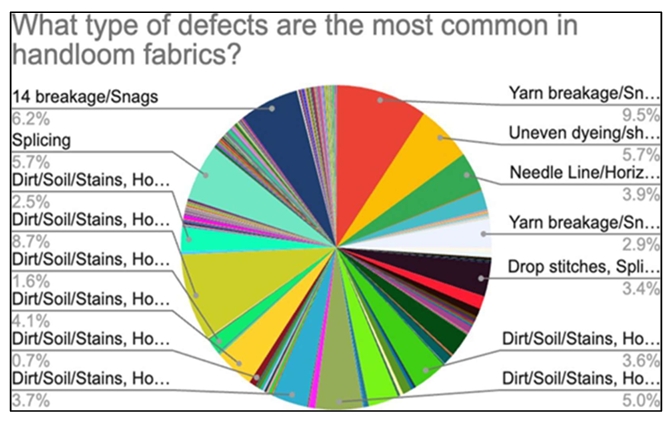
| What type of defects are the most common in handloom fabrics? | Count | Percentage |
|---|---|---|
| Crease Marks | 2 | 0.095 |
| Design error | 1 | 0.048 |
| Dirt/Soil/Stains | 41 | 1.957 |
| Dirt/Soil/Stains, Crease Marks, Drop stitches, Splicing | 1 | 0.048 |
| Dirt/Soil/Stains, Crease Marks, Knots, Drop stitches, Splicing, Thick/thin place, Needle Line/Horizontal Line, Design error | 1 | 0.048 |
| Dirt/Soil/Stains, Crease Marks, Misprint, Splicing | 1 | 0.048 |
| Dirt/Soil/Stains, Drop stitches, Splicing | 6 | 0.286 |
| Dirt/Soil/Stains, Drop stitches, Splicing, Thick/thin place | 1 | 0.048 |
| Dirt/Soil/Stains, Drop stitches, Thick/thin place | 1 | 0.048 |
| Dirt/Soil/Stains, Holes | 3 | 0.143 |
| Dirt/Soil/Stains, Holes, Crease Marks, Drop stitches, Splicing | 1 | 0.048 |
| Dirt/Soil/Stains, Holes, Crease Marks, Knots | 1 | 0.048 |
| Dirt/Soil/Stains, Holes, Crease Marks, Knots, Drop stitches, Thick/thin place, Needle Line/Horizontal Line | 1 | 0.048 |
| Dirt/Soil/Stains, Holes, Drop stitches, Splicing | 1 | 0.048 |
| Dirt/Soil/Stains, Holes, Drop stitches, Thick/thin place, Needle Line/Horizontal Line | 7 | 0.334 |
| Dirt/Soil/Stains, Holes, Knots, Drop stitches | 1 | 0.048 |
| Dirt/Soil/Stains, Holes, Knots, Drop stitches, Splicing | 1 | 0.048 |
| Dirt/Soil/Stains, Holes, Knots, Drop stitches, Thick/thin place, Needle Line/Horizontal Line | 1 | 0.048 |
| Dirt/Soil/Stains, Holes, Misprint | 1 | 0.048 |
| Dirt/Soil/Stains, Holes, Misprint, Thick/thin place, Needle Line/Horizontal Line | 1 | 0.048 |
| Dirt/Soil/Stains, Holes, Splicing | 1 | 0.048 |
| Dirt/Soil/Stains, Holes, Splicing, Thick/thin place | 1 | 0.048 |
| Dirt/Soil/Stains, Holes, Thick/thin place, Needle Line/Horizontal Line | 1 | 0.048 |
| Dirt/Soil/Stains, Holes, Thick/thin place, Needle Line/Horizontal Line, Design error | 1 | 0.048 |
| Dirt/Soil/Stains, Holes, Uneven dyeing/shading, Crease Marks, Knots, Drop stitches, Misprint | 1 | 0.048 |
| Dirt/Soil/Stains, Holes, Uneven dyeing/shading, Drop stitches, Splicing | 1 | 0.048 |
| Dirt/Soil/Stains, Holes, Uneven dyeing/shading, Misprint, Splicing | 1 | 0.048 |
| Dirt/Soil/Stains, Holes, Yarn breakage/Snags | 14 | 0.668 |
| Dirt/Soil/Stains, Holes, Yarn breakage/Snags, Crease Marks | 1 | 0.048 |
| Dirt/Soil/Stains, Holes, Yarn breakage/Snags, Crease Marks, Drop stitches, Misprint, Splicing | 1 | 0.048 |
| Dirt/Soil/Stains, Holes, Yarn breakage/Snags, Crease Marks, Knots, Drop stitches | 1 | 0.048 |
| Dirt/Soil/Stains, Holes, Yarn breakage/Snags, Crease Marks, Splicing | 1 | 0.048 |
| Dirt/Soil/Stains, Holes, Yarn breakage/Snags, Drop stitches, Misprint | 2 | 0.095 |
| Dirt/Soil/Stains, Holes, Yarn breakage/Snags, Drop stitches, Splicing | 6 | 0.286 |
| Dirt/Soil/Stains, Holes, Yarn breakage/Snags, Drop stitches, Thick/thin place, Needle Line/Horizontal Line | 3 | 0.143 |
| Dirt/Soil/Stains, Holes, Yarn breakage/Snags, Knots, Drop stitches, Misprint | 1 | 0.048 |
| Dirt/Soil/Stains, Holes, Yarn breakage/Snags, Knots, Drop stitches, Misprint, Splicing | 1 | 0.048 |
| Dirt/Soil/Stains, Holes, Yarn breakage/Snags, Knots, Drop stitches, Thick/thin place, Needle Line/Horizontal Line | 1 | 0.048 |
| Dirt/Soil/Stains, Holes, Yarn breakage/Snags, Misprint | 1 | 0.048 |
| Dirt/Soil/Stains, Holes, Yarn breakage/Snags, Misprint, Splicing | 1 | 0.048 |
| Dirt/Soil/Stains, Holes, Yarn breakage/Snags, Misprint, Thick/thin place, Needle Line/Horizontal Line | 1 | 0.048 |
| Dirt/Soil/Stains, Holes, Yarn breakage/Snags, Splicing | 1 | 0.048 |
| Dirt/Soil/Stains, Holes, Yarn breakage/Snags, Splicing, Thick/thin place, Needle Line/Horizontal Line | 1 | 0.048 |
| Dirt/Soil/Stains, Holes, Yarn breakage/Snags, Thick/thin place, Needle Line/Horizontal Line | 1 | 0.048 |
| Dirt/Soil/Stains, Holes, Yarn breakage/Snags, Thick/thin place, Needle Line/Horizontal Line, Design error | 4 | 0.191 |
| Dirt/Soil/Stains, Holes, Yarn breakage/Snags, Uneven dyeing/shading | 19 | 0.907 |
| Dirt/Soil/Stains, Holes, Yarn breakage/Snags, Uneven dyeing/shading, Crease Marks | 17 | 0.811 |
| Dirt/Soil/Stains, Holes, Yarn breakage/Snags, Uneven dyeing/shading, Crease Marks, Drop stitches | 6 | 0.286 |
| Dirt/Soil/Stains, Holes, Yarn breakage/Snags, Uneven dyeing/shading, Crease Marks, Drop stitches, Misprint | 2 | 0.095 |
| Dirt/Soil/Stains, Holes, Yarn breakage/Snags, Uneven dyeing/shading, Crease Marks, Drop stitches, Splicing | 3 | 0.143 |
| Dirt/Soil/Stains, Holes, Yarn breakage/Snags, Uneven dyeing/shading, Crease Marks, Drop stitches, Splicing, Thick/thin place | 2 | 0.095 |
| Dirt/Soil/Stains, Holes, Yarn breakage/Snags, Uneven dyeing/shading, Crease Marks, Drop stitches, Thick/thin place | 1 | 0.048 |
| Dirt/Soil/Stains, Holes, Yarn breakage/Snags, Uneven dyeing/shading, Crease Marks, Knots | 27 | 1.288 |
| Dirt/Soil/Stains, Holes, Yarn breakage/Snags, Uneven dyeing/shading, Crease Marks, Knots, Drop stitches | 75 | 3.578 |
| Dirt/Soil/Stains, Holes, Yarn breakage/Snags, Uneven dyeing/shading, Crease Marks, Knots, Drop stitches, Misprint | 78 | 3.723 |
| Dirt/Soil/Stains, Holes, Yarn breakage/Snags, Uneven dyeing/shading, Crease Marks, Knots, Drop stitches, Misprint, Needle Line/Horizontal Line, Design error | 1 | 0.048 |
| Dirt/Soil/Stains, Holes, Yarn breakage/Snags, Uneven dyeing/shading, Crease Marks, Knots, Drop stitches, Misprint, Splicing | 104 | 4.962 |
| Dirt/Soil/Stains, Holes, Yarn breakage/Snags, Uneven dyeing/shading, Crease Marks, Knots, Drop stitches, Misprint, Splicing, Needle Line/Horizontal Line | 2 | 0.095 |
| Dirt/Soil/Stains, Holes, Yarn breakage/Snags, Uneven dyeing/shading, Crease Marks, Knots, Drop stitches, Misprint, Splicing, Thick/thin place | 66 | 3.149 |
| Dirt/Soil/Stains, Holes, Yarn breakage/Snags, Uneven dyeing/shading, Crease Marks, Knots, Drop stitches, Misprint, Splicing, Thick/thin place, Needle Line/Horizontal Line | 9 | 0.429 |
| Dirt/Soil/Stains, Holes, Yarn breakage/Snags, Uneven dyeing/shading, Crease Marks, Knots, Drop stitches, Misprint, Splicing, Thick/thin place, Needle Line/Horizontal Line, Design error | 20 | 0.954 |
| Dirt/Soil/Stains, Holes, Yarn breakage/Snags, Uneven dyeing/shading, Crease Marks, Knots, Drop stitches, Misprint, Thick/thin place | 15 | 0.716 |
| Dirt/Soil/Stains, Holes, Yarn breakage/Snags, Uneven dyeing/shading, Crease Marks, Knots, Drop stitches, Misprint, Thick/thin place, Needle Line/Horizontal Line | 2 | 0.095 |
| Dirt/Soil/Stains, Holes, Yarn breakage/Snags, Uneven dyeing/shading, Crease Marks, Knots, Drop stitches, Misprint, Thick/thin place, Needle Line/Horizontal Line, Design error | 1 | 0.048 |
| Dirt/Soil/Stains, Holes, Yarn breakage/Snags, Uneven dyeing/shading, Crease Marks, Knots, Drop stitches, Needle Line/Horizontal Line, Design error | 2 | 0.095 |
| Dirt/Soil/Stains, Holes, Yarn breakage/Snags, Uneven dyeing/shading, Crease Marks, Knots, Drop stitches, Splicing | 85 | 4.056 |
| Dirt/Soil/Stains, Holes, Yarn breakage/Snags, Uneven dyeing/shading, Crease Marks, Knots, Drop stitches, Splicing, Needle Line/Horizontal Line | 3 | 0.143 |
| Dirt/Soil/Stains, Holes, Yarn breakage/Snags, Uneven dyeing/shading, Crease Marks, Knots, Drop stitches, Splicing, Needle Line/Horizontal Line, Design error | 1 | 0.048 |
| Dirt/Soil/Stains, Holes, Yarn breakage/Snags, Uneven dyeing/shading, Crease Marks, Knots, Drop stitches, Splicing, Thick/thin place | 182 | 8.683 |
| Dirt/Soil/Stains, Holes, Yarn breakage/Snags, Uneven dyeing/shading, Crease Marks, Knots, Drop stitches, Splicing, Thick/thin place, Design error | 1 | 0.048 |
| Dirt/Soil/Stains, Holes, Yarn breakage/Snags, Uneven dyeing/shading, Crease Marks, Knots, Drop stitches, Splicing, Thick/thin place, Needle Line/Horizontal Line | 52 | 2.481 |
| Dirt/Soil/Stains, Holes, Yarn breakage/Snags, Uneven dyeing/shading, Crease Marks, Knots, Drop stitches, Splicing, Thick/thin place, Needle Line/Horizontal Line, Design error | 33 | 1.574 |
| Dirt/Soil/Stains, Holes, Yarn breakage/Snags, Uneven dyeing/shading, Crease Marks, Knots, Drop stitches, Thick/thin place | 8 | 0.382 |
| Dirt/Soil/Stains, Holes, Yarn breakage/Snags, Uneven dyeing/shading, Crease Marks, Knots, Drop stitches, Thick/thin place, Needle Line/Horizontal Line | 3 | 0.143 |
| Dirt/Soil/Stains, Holes, Yarn breakage/Snags, Uneven dyeing/shading, Crease Marks, Knots, Drop stitches, Thick/thin place, Needle Line/Horizontal Line, Design error | 6 | 0.286 |
| Dirt/Soil/Stains, Holes, Yarn breakage/Snags, Uneven dyeing/shading, Crease Marks, Knots, Misprint | 4 | 0.191 |
| Dirt/Soil/Stains, Holes, Yarn breakage/Snags, Uneven dyeing/shading, Crease Marks, Knots, Misprint, Splicing | 3 | 0.143 |
| Dirt/Soil/Stains, Holes, Yarn breakage/Snags, Uneven dyeing/shading, Crease Marks, Knots, Misprint, Splicing, Thick/thin place | 5 | 0.239 |
| Dirt/Soil/Stains, Holes, Yarn breakage/Snags, Uneven dyeing/shading, Crease Marks, Knots, Misprint, Splicing, Thick/thin place, Needle Line/Horizontal Line | 1 | 0.048 |
| Dirt/Soil/Stains, Holes, Yarn breakage/Snags, Uneven dyeing/shading, Crease Marks, Knots, Misprint, Thick/thin place | 1 | 0.048 |
| Dirt/Soil/Stains, Holes, Yarn breakage/Snags, Uneven dyeing/shading, Crease Marks, Knots, Splicing | 4 | 0.191 |
| Dirt/Soil/Stains, Holes, Yarn breakage/Snags, Uneven dyeing/shading, Crease Marks, Knots, Splicing, Thick/thin place | 4 | 0.191 |
| Dirt/Soil/Stains, Holes, Yarn breakage/Snags, Uneven dyeing/shading, Crease Marks, Knots, Splicing, Thick/thin place, Needle Line/Horizontal Line | 3 | 0.143 |
| Dirt/Soil/Stains, Holes, Yarn breakage/Snags, Uneven dyeing/shading, Crease Marks, Knots, Splicing, Thick/thin place, Needle Line/Horizontal Line, Design error | 2 | 0.095 |
| Dirt/Soil/Stains, Holes, Yarn breakage/Snags, Uneven dyeing/shading, Crease Marks, Knots, Thick/thin place, Needle Line/Horizontal Line | 2 | 0.095 |
| Dirt/Soil/Stains, Holes, Yarn breakage/Snags, Uneven dyeing/shading, Crease Marks, Misprint, Thick/thin place, Needle Line/Horizontal Line | 2 | 0.095 |
| Dirt/Soil/Stains, Holes, Yarn breakage/Snags, Uneven dyeing/shading, Crease Marks, Needle Line/Horizontal Line | 1 | 0.048 |
| Dirt/Soil/Stains, Holes, Yarn breakage/Snags, Uneven dyeing/shading, Crease Marks, Splicing, Thick/thin place | 1 | 0.048 |
| Dirt/Soil/Stains, Holes, Yarn breakage/Snags, Uneven dyeing/shading, Crease Marks, Splicing, Thick/thin place, Needle Line/Horizontal Line, Design error | 1 | 0.048 |
| Dirt/Soil/Stains, Holes, Yarn breakage/Snags, Uneven dyeing/shading, Drop stitches, Misprint, Splicing | 1 | 0.048 |
| Dirt/Soil/Stains, Holes, Yarn breakage/Snags, Uneven dyeing/shading, Drop stitches, Splicing | 3 | 0.143 |
| Dirt/Soil/Stains, Holes, Yarn breakage/Snags, Uneven dyeing/shading, Knots | 3 | 0.143 |
| Dirt/Soil/Stains, Holes, Yarn breakage/Snags, Uneven dyeing/shading, Knots, Drop stitches | 1 | 0.048 |
| Dirt/Soil/Stains, Holes, Yarn breakage/Snags, Uneven dyeing/shading, Knots, Drop stitches, Misprint | 2 | 0.095 |
| Dirt/Soil/Stains, Holes, Yarn breakage/Snags, Uneven dyeing/shading, Knots, Drop stitches, Splicing, Thick/thin place, Needle Line/Horizontal Line | 1 | 0.048 |
| Dirt/Soil/Stains, Holes, Yarn breakage/Snags, Uneven dyeing/shading, Misprint | 1 | 0.048 |
| Dirt/Soil/Stains, Holes, Yarn breakage/Snags, Uneven dyeing/shading, Misprint, Splicing, Thick/thin place, Needle Line/Horizontal Line | 1 | 0.048 |
| Dirt/Soil/Stains, Holes, Yarn breakage/Snags, Uneven dyeing/shading, Misprint, Thick/thin place | 2 | 0.095 |
| Dirt/Soil/Stains, Holes, Yarn breakage/Snags, Uneven dyeing/shading, Splicing, Needle Line/Horizontal Line | 1 | 0.048 |
| Dirt/Soil/Stains, Holes, Yarn breakage/Snags, Uneven dyeing/shading, Thick/thin place, Needle Line/Horizontal Line | 1 | 0.048 |
| Dirt/Soil/Stains, Holes, Yarn breakage/Snags, Uneven dyeing/shading, Thick/thin place, Needle Line/Horizontal Line, Design error | 1 | 0.048 |
| Dirt/Soil/Stains, Knots | 1 | 0.048 |
| Dirt/Soil/Stains, Knots, Design error | 1 | 0.048 |
| Dirt/Soil/Stains, Knots, Misprint | 1 | 0.048 |
| Dirt/Soil/Stains, Knots, Needle Line/Horizontal Line | 1 | 0.048 |
| Dirt/Soil/Stains, Misprint | 1 | 0.048 |
| Dirt/Soil/Stains, Misprint, Splicing | 2 | 0.095 |
| Dirt/Soil/Stains, Splicing | 5 | 0.239 |
| Dirt/Soil/Stains, Uneven dyeing/shading | 6 | 0.286 |
| Dirt/Soil/Stains, Uneven dyeing/shading, Crease Marks, Thick/thin place, Needle Line/Horizontal Line | 1 | 0.048 |
| Dirt/Soil/Stains, Uneven dyeing/shading, Splicing | 4 | 0.191 |
| Dirt/Soil/Stains, Uneven dyeing/shading, Splicing, Thick/thin place, Needle Line/Horizontal Line | 1 | 0.048 |
| Dirt/Soil/Stains, Yarn breakage/Snags | 11 | 0.525 |
| Dirt/Soil/Stains, Yarn breakage/Snags, Crease Marks, Drop stitches, Splicing | 2 | 0.095 |
| Dirt/Soil/Stains, Yarn breakage/Snags, Crease Marks, Misprint | 1 | 0.048 |
| Dirt/Soil/Stains, Yarn breakage/Snags, Design error | 2 | 0.095 |
| Dirt/Soil/Stains, Yarn breakage/Snags, Drop stitches | 3 | 0.143 |
| Dirt/Soil/Stains, Yarn breakage/Snags, Drop stitches, Misprint, Splicing | 1 | 0.048 |
| Dirt/Soil/Stains, Yarn breakage/Snags, Drop stitches, Misprint, Thick/thin place | 1 | 0.048 |
| Dirt/Soil/Stains, Yarn breakage/Snags, Drop stitches, Splicing | 5 | 0.239 |
| Dirt/Soil/Stains, Yarn breakage/Snags, Drop stitches, Splicing, Thick/thin place | 1 | 0.048 |
| Dirt/Soil/Stains, Yarn breakage/Snags, Knots, Design error | 3 | 0.143 |
| Dirt/Soil/Stains, Yarn breakage/Snags, Knots, Misprint | 1 | 0.048 |
| Dirt/Soil/Stains, Yarn breakage/Snags, Misprint | 1 | 0.048 |
| Dirt/Soil/Stains, Yarn breakage/Snags, Misprint, Design error | 1 | 0.048 |
| Dirt/Soil/Stains, Yarn breakage/Snags, Misprint, Thick/thin place | 1 | 0.048 |
| Dirt/Soil/Stains, Yarn breakage/Snags, Needle Line/Horizontal Line, Design error | 1 | 0.048 |
| Dirt/Soil/Stains, Yarn breakage/Snags, Splicing | 1 | 0.048 |
| Dirt/Soil/Stains, Yarn breakage/Snags, Splicing, Thick/thin place | 1 | 0.048 |
| Dirt/Soil/Stains, Yarn breakage/Snags, Thick/thin place | 2 | 0.095 |
| Dirt/Soil/Stains, Yarn breakage/Snags, Uneven dyeing/shading | 17 | 0.811 |
| Dirt/Soil/Stains, Yarn breakage/Snags, Uneven dyeing/shading, Crease Marks | 7 | 0.334 |
| Dirt/Soil/Stains, Yarn breakage/Snags, Uneven dyeing/shading, Crease Marks, Knots, Drop stitches, Splicing | 1 | 0.048 |
| Dirt/Soil/Stains, Yarn breakage/Snags, Uneven dyeing/shading, Crease Marks, Knots, Drop stitches, Splicing, Thick/thin place, Needle Line/Horizontal Line | 1 | 0.048 |
| Dirt/Soil/Stains, Yarn breakage/Snags, Uneven dyeing/shading, Crease Marks, Knots, Splicing, Thick/thin place, Needle Line/Horizontal Line | 1 | 0.048 |
| Dirt/Soil/Stains, Yarn breakage/Snags, Uneven dyeing/shading, Crease Marks, Misprint | 1 | 0.048 |
| Dirt/Soil/Stains, Yarn breakage/Snags, Uneven dyeing/shading, Crease Marks, Needle Line/Horizontal Line, Design error | 1 | 0.048 |
| Dirt/Soil/Stains, Yarn breakage/Snags, Uneven dyeing/shading, Crease Marks, Thick/thin place | 1 | 0.048 |
| Dirt/Soil/Stains, Yarn breakage/Snags, Uneven dyeing/shading, Design error | 2 | 0.095 |
| Dirt/Soil/Stains, Yarn breakage/Snags, Uneven dyeing/shading, Drop stitches, Splicing | 7 | 0.334 |
| Dirt/Soil/Stains, Yarn breakage/Snags, Uneven dyeing/shading, Knots | 1 | 0.048 |
| Dirt/Soil/Stains, Yarn breakage/Snags, Uneven dyeing/shading, Knots, Drop stitches, Splicing | 1 | 0.048 |
| Dirt/Soil/Stains, Yarn breakage/Snags, Uneven dyeing/shading, Knots, Splicing | 2 | 0.095 |
| Dirt/Soil/Stains, Yarn breakage/Snags, Uneven dyeing/shading, Needle Line/Horizontal Line | 1 | 0.048 |
| Dirt/Soil/Stains, Yarn breakage/Snags, Uneven dyeing/shading, Splicing | 1 | 0.048 |
| Drop stitches | 8 | 0.382 |
| Drop stitches, Misprint | 1 | 0.048 |
| Drop stitches, Misprint, Splicing, Thick/thin place, Needle Line/Horizontal Line | 1 | 0.048 |
| Drop stitches, Misprint, Thick/thin place | 1 | 0.048 |
| Drop stitches, Splicing | 71 | 3.388 |
| Drop stitches, Splicing, Thick/thin place, Needle Line/Horizontal Line | 1 | 0.048 |
| Drop stitches, Thick/thin place | 1 | 0.048 |
| Holes, Drop stitches, Splicing | 2 | 0.095 |
| Holes, Drop stitches, Thick/thin place, Needle Line/Horizontal Line | 1 | 0.048 |
| Holes, Knots, Drop stitches, Needle Line/Horizontal Line, Design error | 1 | 0.048 |
| Holes, Knots, Drop stitches, Thick/thin place | 1 | 0.048 |
| Holes, Knots, Drop stitches, Thick/thin place, Needle Line/Horizontal Line | 1 | 0.048 |
| Holes, Misprint | 1 | 0.048 |
| Holes, Needle Line/Horizontal Line | 2 | 0.095 |
| Holes, Thick/thin place | 1 | 0.048 |
| Holes, Yarn breakage/Snags | 51 | 2.433 |
| Holes, Yarn breakage/Snags, Drop stitches, Thick/thin place | 1 | 0.048 |
| Holes, Yarn breakage/Snags, Uneven dyeing/shading | 5 | 0.239 |
| Holes, Yarn breakage/Snags, Uneven dyeing/shading, Crease Marks, Knots | 2 | 0.095 |
| Holes, Yarn breakage/Snags, Uneven dyeing/shading, Crease Marks, Knots, Drop stitches | 1 | 0.048 |
| Holes, Yarn breakage/Snags, Uneven dyeing/shading, Crease Marks, Knots, Drop stitches, Splicing, Thick/thin place | 1 | 0.048 |
| Holes, Yarn breakage/Snags, Uneven dyeing/shading, Crease Marks, Knots, Drop stitches, Splicing, Thick/thin place, Needle Line/Horizontal Line, Design error | 1 | 0.048 |
| Holes, Yarn breakage/Snags, Uneven dyeing/shading, Knots, Drop stitches | 1 | 0.048 |
| Holes, Yarn breakage/Snags, Uneven dyeing/shading, Misprint, Thick/thin place | 1 | 0.048 |
| Holes, Yarn breakage/Snags, Uneven dyeing/shading, Thick/thin place, Needle Line/Horizontal Line | 2 | 0.095 |
| Knots | 2 | 0.095 |
| Knots, Design error | 1 | 0.048 |
| Knots, Drop stitches | 1 | 0.048 |
| Knots, Misprint | 3 | 0.143 |
| Knots, Misprint, Design error | 2 | 0.095 |
| Knots, Splicing, Thick/thin place | 1 | 0.048 |
| Misprint | 15 | 0.716 |
| Misprint, Needle Line/Horizontal Line | 1 | 0.048 |
| Misprint, Splicing | 1 | 0.048 |
| Misprint, Thick/thin place | 3 | 0.143 |
| Needle Line/Horizontal Line | 82 | 3.913 |
| Splicing | 120 | 5.725 |
| Splicing, Needle Line/Horizontal Line | 1 | 0.048 |
| Splicing, Thick/thin place | 1 | 0.048 |
| Thick/thin place | 2 | 0.095 |
| Uneven dyeing/shading | 120 | 5.725 |
| Uneven dyeing/shading, Misprint | 1 | 0.048 |
| Uneven dyeing/shading, Misprint, Thick/thin place | 1 | 0.048 |
| Uneven dyeing/shading, Splicing | 1 | 0.048 |
| Uneven dyeing/shading, Splicing, Thick/thin place, Needle Line/Horizontal Line | 1 | 0.048 |
| Yarn breakage/Snags | 328 | 15.649 |
| Yarn breakage/Snags, Crease Marks, Knots | 1 | 0.048 |
| Yarn breakage/Snags, Drop stitches | 1 | 0.048 |
| Yarn breakage/Snags, Drop stitches, Splicing | 1 | 0.048 |
| Yarn breakage/Snags, Knots | 7 | 0.334 |
| Yarn breakage/Snags, Knots, Design error | 3 | 0.143 |
| Yarn breakage/Snags, Knots, Misprint | 3 | 0.143 |
| Yarn breakage/Snags, Knots, Misprint, Design error | 1 | 0.048 |
| Yarn breakage/Snags, Knots, Misprint, Thick/thin place, Needle Line/Horizontal Line | 1 | 0.048 |
| Yarn breakage/Snags, Knots, Needle Line/Horizontal Line | 3 | 0.143 |
| Yarn breakage/Snags, Knots, Splicing | 1 | 0.048 |
| Yarn breakage/Snags, Knots, Splicing, Thick/thin place, Needle Line/Horizontal Line | 2 | 0.095 |
| Yarn breakage/Snags, Knots, Thick/thin place | 2 | 0.095 |
| Yarn breakage/Snags, Knots, Thick/thin place, Design error | 1 | 0.048 |
| Yarn breakage/Snags, Knots, Thick/thin place, Needle Line/Horizontal Line | 2 | 0.095 |
| Yarn breakage/Snags, Knots, Thick/thin place, Needle Line/Horizontal Line, Design error | 1 | 0.048 |
| Yarn breakage/Snags, Misprint | 1 | 0.048 |
| Yarn breakage/Snags, Misprint, Thick/thin place, Design error | 1 | 0.048 |
| Yarn breakage/Snags, Splicing | 1 | 0.048 |
| Yarn breakage/Snags, Splicing, Design error | 2 | 0.095 |
| Yarn breakage/Snags, Splicing, Needle Line/Horizontal Line | 3 | 0.143 |
| Yarn breakage/Snags, Thick/thin place | 3 | 0.143 |
| Yarn breakage/Snags, Uneven dyeing/shading | 64 | 3.053 |
| Yarn breakage/Snags, Uneven dyeing/shading, Crease Marks | 6 | 0.286 |
| Yarn breakage/Snags, Uneven dyeing/shading, Crease Marks, Knots | 2 | 0.095 |
| Yarn breakage/Snags, Uneven dyeing/shading, Crease Marks, Knots, Drop stitches | 2 | 0.095 |
| Yarn breakage/Snags, Uneven dyeing/shading, Crease Marks, Knots, Drop stitches, Misprint, Splicing | 1 | 0.048 |
| Yarn breakage/Snags, Uneven dyeing/shading, Crease Marks, Misprint, Needle Line/Horizontal Line | 1 | 0.048 |
| Yarn breakage/Snags, Uneven dyeing/shading, Drop stitches, Splicing | 1 | 0.048 |
| Yarn breakage/Snags, Uneven dyeing/shading, Drop stitches, Splicing, Needle Line/Horizontal Line | 1 | 0.048 |
| Yarn breakage/Snags, Uneven dyeing/shading, Drop stitches, Splicing, Thick/thin place | 1 | 0.048 |
| Yarn breakage/Snags, Uneven dyeing/shading, Knots, Needle Line/Horizontal Line | 1 | 0.048 |
| Yarn breakage/Snags, Uneven dyeing/shading, Knots, Splicing | 1 | 0.048 |
| Yarn breakage/Snags, Uneven dyeing/shading, Misprint | 1 | 0.048 |
| Yarn breakage/Snags, Uneven dyeing/shading, Misprint, Needle Line/Horizontal Line | 2 | 0.095 |
| Yarn breakage/Snags, Uneven dyeing/shading, Misprint, Thick/thin place, Needle Line/Horizontal Line | 1 | 0.048 |
| Yarn breakage/Snags, Uneven dyeing/shading, Needle Line/Horizontal Line | 1 | 0.048 |
| Yarn breakage/Snags, Uneven dyeing/shading, Needle Line/Horizontal Line, Design error | 1 | 0.048 |
| Yarn breakage/Snags, Uneven dyeing/shading, Splicing | 5 | 0.239 |
| Yarn breakage/Snags, Uneven dyeing/shading, Splicing, Needle Line/Horizontal Line | 3 | 0.143 |
| Yarn breakage/Snags, Uneven dyeing/shading, Splicing, Thick/thin place, Needle Line/Horizontal Line | 2 | 0.095 |
| Yarn breakage/Snags, Uneven dyeing/shading, Thick/thin place, Needle Line/Horizontal Line | 1 | 0.048 |
| Grand Total | 2096 |
What do you do with defective fabric?
The data clearly indicates that the primary action taken with defective fabric by handloom weavers is to
sell it in the
domestic market. This practice is consistently reflected across the data, demonstrating that it is a widely
adopted
strategy among weavers. This insight could be important for understanding market dynamics and the potential
need for
quality control measures within the handloom sector.
The data indicates a strong inclination among respondents to either keep defective fabric for personal use
or sell it in
the domestic market rather than not having a relevant response.
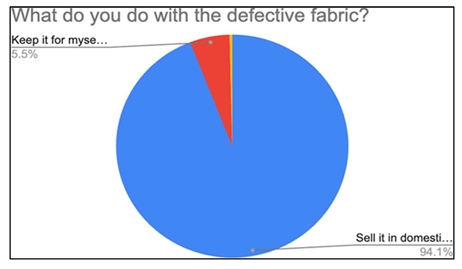
| What do you do with the defective fabric? | Percentage (%) |
|---|---|
| Keep it for myself or my family | 5.5 |
| Sell it in domestic market | 94.1 |
| Discard it | 0.4 |
Do you know which defects you accidentally make the most in your product?
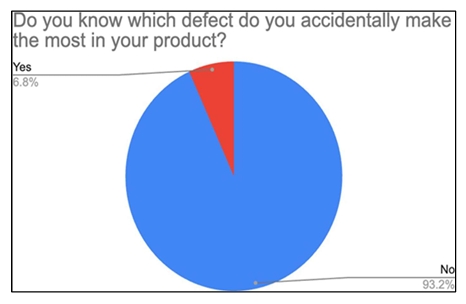
The data indicates that a substantial proportion of handloom weavers lack awareness of the specific defects that commonly occur in their products. This gap in understanding can adversely affect quality control practices and reduce overall production efficiency. By addressing this issue through targeted training programs and systematic quality assessment mechanisms, it may be possible to enhance defect recognition, improve workmanship, and ultimately raise the overall quality and consistency of handloom products.
Do you segregate the products based on the quality?
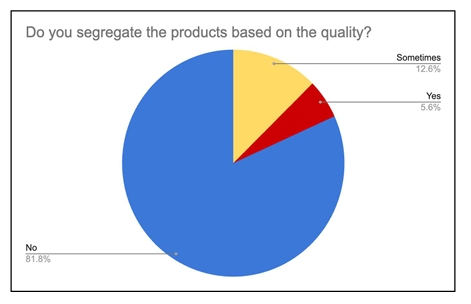
The data suggests that a significant majority of handloom weavers do not segregate their products based on quality. This practice could lead to inconsistencies in the market and may affect customer satisfaction. Implementing quality segregation practices could help improve the overall standard of handloom products and potentially enhance marketability and customer trust.
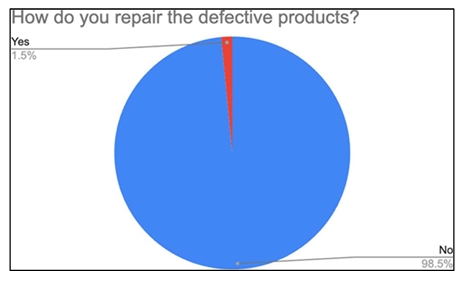
Do you repair the defective products?
The data suggests that a significant majority of handloom weavers do not repair defective products. This lack of repair practices could contribute to quality issues and customer dissatisfaction.
Have you taken any special training for reducing the defects that are there in the manufacturing?
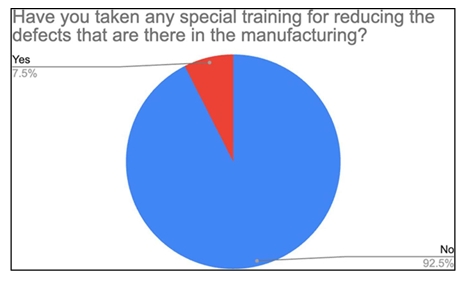
The data suggests that a significant majority of handloom weavers have not received any specialized training
aimed at
reducing defects during the manufacturing process. This absence of formal skill upgradation and defect-control
training
is likely contributing to the continued occurrence of quality issues in their products. Without appropriate
guidance,
weavers may rely solely on traditional practices, which may not adequately address modern quality
requirements.
Providing structured access to relevant training programs and actively encouraging participation can help
enhance
technical skills, improve defect identification and prevention, and ultimately raise the overall quality of
handloom
products. Such improvements are expected to strengthen market competitiveness, increase customer satisfaction,
and
support the long-term sustainability of the handloom sector.
SECTION 6: Counseling
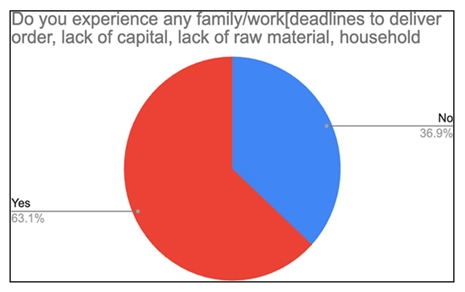
Do you experience any family or work [deadlines to deliver order, lack of capital,lack of raw material, household work] pressure to do handloom activities?
The data suggests that a significant majority of handloom weavers from regions of Assam experience family or work pressures, such as deadlines, lack of capital, lack of raw materials, and household work, while engaging in handloom activities which is relatively less in specific regions. These pressures can affect their productivity and the quality of their work. Addressing these pressures through better resource management, financial support, and time management strategies could help improve the working conditions and output of handloom weavers.
Do you think working in the handloom sector can improve your living conditions in the future?
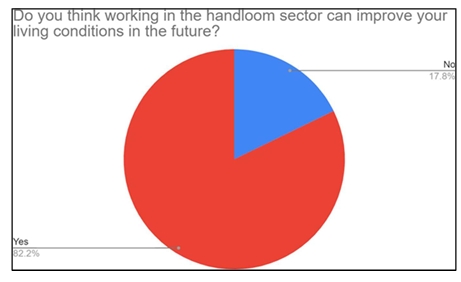
The data suggests that all the handloom weavers firmly believe that their work in the handloom sector has
significant
potential to improve their living conditions in the future. This finding clearly highlights the strong sense
of
optimism, confidence, and faith that the weavers place in their industry, as well as their expectations
regarding its
capacity to provide economic stability and upliftment over time. Such positive perceptions indicate that the
handloom
sector is viewed not merely as a traditional occupation, but as a viable pathway toward improved livelihoods
and
long-term socio-economic well-being.
Providing adequate institutional support, access to resources, skill development initiatives, and expanded
market
opportunities within the handloom sector could further strengthen this positive outlook. These measures would
help
reinforce the weavers’ belief in the sustainability of their profession and actively contribute to achieving
better
living conditions, enhanced income security, and overall improvement in the quality of life of the weaver
community.
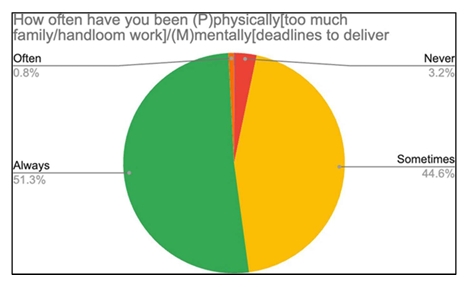
How often have you been (P) physically [too much family/handloom work] / (M) mentally [deadlines to deliver order, lack of capital, lack of sleep] / (E) emotionally [family issues, social issues] exhausted?
The data collected, with responses ranging from sometimes to always, clearly indicate a considerable physical
as well as
psychological impact on Assamese weavers. These responses reflect the regularity and persistence of
health-related
challenges faced by the weavers in their day-to-day lives.
The findings reveal that weavers
predominantly
experience
physical problems that stem from heavy and continuous workloads, particularly due to the dual responsibility
of managing
household duties alongside demanding handloom activities. This combination of domestic labor and occupational
work
places sustained strain on their bodies over long periods.
In addition to these physical demands, pressures related to meeting strict delivery deadlines, coping with
financial
limitations, inadequate rest and sleep, and prolonged economic insecurity further intensify their physical
exhaustion.
These factors not only reduce recovery time but also aggravate existing health issues. Alongside physical
strain, the
weavers also experience notable psychological stress and mental distress arising from social expectations,
family
responsibilities, and the need to balance multiple roles simultaneously.
This situation highlights
the
interconnected
nature of physical fatigue and emotional stress, emphasizing the combined physical and psychological burden
associated
with handloom-based livelihoods among Assamese weavers.
What was the reason for that exhaustion?(P/M/E)
Handloom weavers in Assam experience considerable physical exhaustion as a result of repetitive movements,
prolonged
working hours, and inadequate ergonomic conditions. These factors place continuous strain on the hands, arms,
shoulders,
and back, which is often intensified by the lack of properly designed workstations and supportive
equipment.
In addition
to physical fatigue, weavers face significant mental stress arising from strict production deadlines,
financial
uncertainty, and the constant challenge of balancing work with familial and social responsibilities.
Collectively, these
conditions underscore the urgent need for improved working environments, ergonomic interventions, supportive
policies,
and better access to resources. Such measures are essential to reduce both physical and psychological burdens
and to
ensure a sustainable, healthy, and dignified livelihood for handloom artisans in Assam.
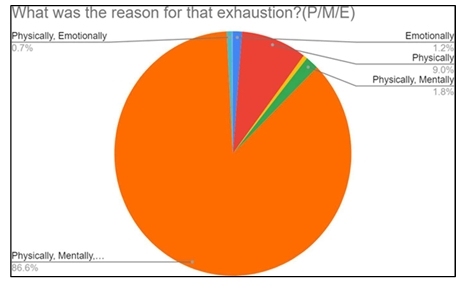
| What was the reason for that exhaustion? (P/M/E) | Percentage (%) |
|---|---|
| Physically, Mentally, Emotionally | 88.6 |
| Physically, Emotionally | 0.7 |
| Physically, Mentally | 1.8 |
| Emotionally | 1.2 |
| Physically | 9 |
| Mentally, Emotionally | 0.1 |
| Mentally | 0.6 |
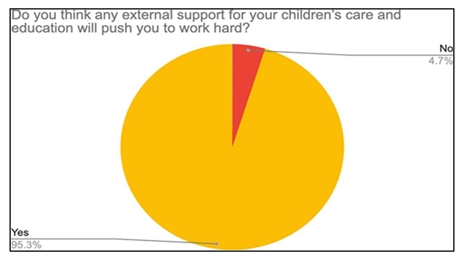
Do you think any external support for your children’s care and education will push you to work hard?
The majority of handloom workers in Assam responded positively to the idea that external support for their
children's
care and education would motivate them to work harder. This response underscores the pivotal role of family
and future
generations in their work motivation. For many weavers, the opportunity to provide better opportunities for
their
children serves as a powerful incentive, driving them to endure the physical and mental challenges of their
craft.
External support in terms of childcare and education can alleviate some of the burdens associated with
balancing work
and family responsibilities, allowing weavers to focus more effectively on their craft and potentially
increasing their
productivity and income stability in the long run.
What is the most dissatisfying thing about weaving?
The most dissatisfying aspect of weaving for handloom weavers in Assam is the low income they earn from their craft. Despite the intricate skills and labor-intensive nature of weaving, many weavers struggle to earn a sustainable livelihood. This low income not only reflects economic hardships but also impacts their quality of life, limiting their ability to invest in education, healthcare, and overall well-being.
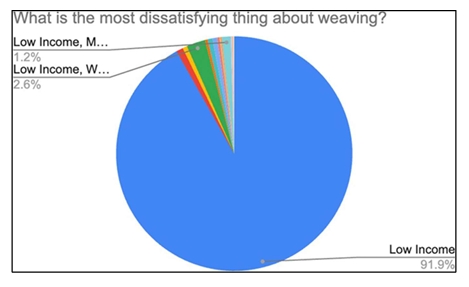
| What is the most dissatisfying thing about weaving? | Percentage (%) |
|---|---|
| Low Income, Mental Stress, Societal Pressure | 1.2 |
| Low Income, Work Stress, Mental Stress | 2.6 |
| Low Income, Family Pressure/disturbance | 0.7 |
| Low Income, Family Pressure/disturbance, Gender Discrimination, Work Stress, Mental Stress, Societal Pressure | 0.6 |
| Physically, Mentally | 1.8 |
| Low Income, Family Pressure/disturbance, Work Stress | 0 |
| Low Income, Work Stress | 0.2 |
| Work Stress, Mental Stress | 0.3 |
| Low Income | 91.9 |
| Work Stress | 0.9 |
| Family Pressure/Disturbance | 0.6 |
| Mental Stress | 0.3 |
| Mental Stress, Societal Pressure | 0.1 |
| Low Income, Family Pressure/disturbance, Work Stress, Mental Stress | 0.2 |
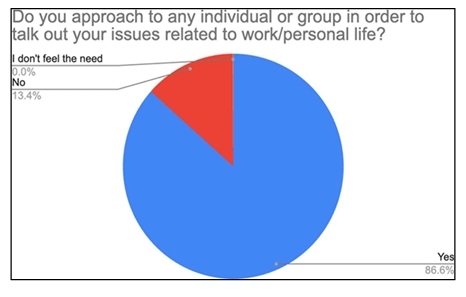
Do you approach to any individual or group in order to talk out your issues related to work/personal life?
The data suggests that a majority of handloom weavers do approach individuals or groups to talk out their issues related to work or personal life. However, it also highlights that a significant minority do not seek such support. This may indicate a need for better awareness and access to support systems for these weavers, helping those who currently do not seek help to feel more comfortable doing so.
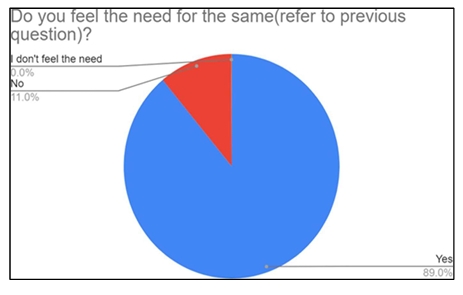
Do you feel the need for the same (refer to the previous question)?
The data suggests that nearly all the handloom weavers feel the need to approach individuals or groups to talk out their issues related to work or personal life. This highlights the importance of providing accessible and effective support systems for weavers to discuss and address their concerns. Implementing such support could greatly enhance their well-being and productivity.
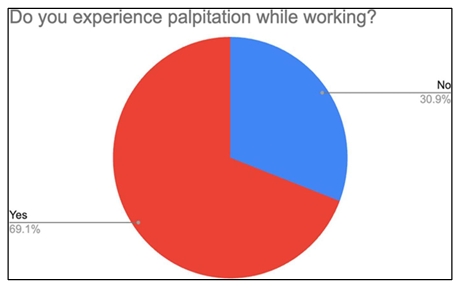
Do you experience palpitation while working?
The physical strain of their job is highlighted by the fact that most weavers report experiencing palpitations
and
breathlessness during handloom activities. These health problems are worsened by the physically demanding
nature of
weaving, which frequently calls for extended periods of time spent sitting in restricted positions. Repetitive
motions
and inadequate ventilation in work environments are two more factors that increase respiratory and
cardiovascular
strain.
In addition to having an immediate negative impact on weavers' comfort and productivity,
these conditions also
raise questions regarding potential long-term health effects.Handloom weavers' wellbeing can be improved and
this
problem can be lessened by addressing these aspects through ergonomic treatments, workplace changes, and
health
monitoring.
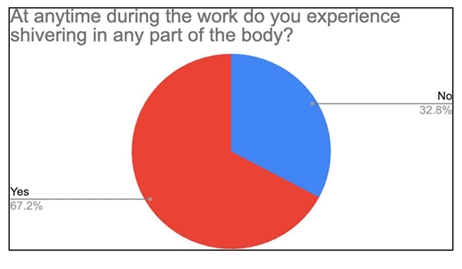
At any time during work do you experience shivering in any part of the body?
It appears from the data that a considerable proportion of handloom weavers shiver in one or more body parts while they are weaving. There may be a health problem here that requires treatment. In order to enhance the wellbeing and working conditions of the weavers, it could be required to look into the exact root cause of this issue, such as physical strain, working conditions, or underlying health concerns.
How often do you feel feverish?
Based on the data, it appears that most handloom weavers experience feverish symptoms once a month. This data may reveal underlying medical disorders or the negative effects of their working environment on their health. It will take further research to determine the origins of this recurrent feverish sensation. To properly address this issue, it could be helpful to give the weavers access to health education, enhance working conditions, and provide medical check-ups.
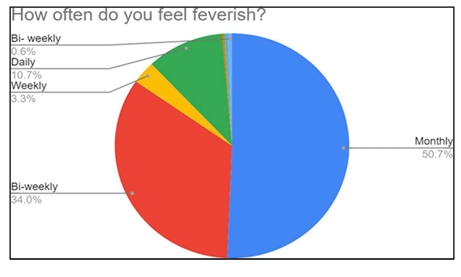
| How often do you feel feverish? | Percentage (%) |
|---|---|
| Monthly | 50.7 |
| Bi-weekly | 34.6 |
| Daily | 10.7 |
| Weekly | 3.8 |
| I don’t feel feverish at all | 0.3 |
How often do you do rejuvenating activities to relax yourself?
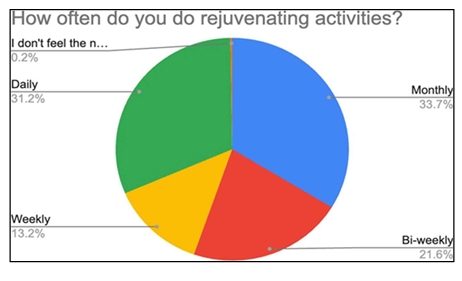
The research indicates a range of frequency of rejuvenating activities for handloom weavers to unwind, with an average of nearly once a week.This suggests that although a considerable proportion of weavers place a high value on regular relaxation, a considerable proportion might not be engaging in these activities regularly enough, either as a result of work pressures or a lack of time. Promoting more regular rejuvenation activities may assist raise their level of productivity and general well-being.
Does anyone in your family drink?
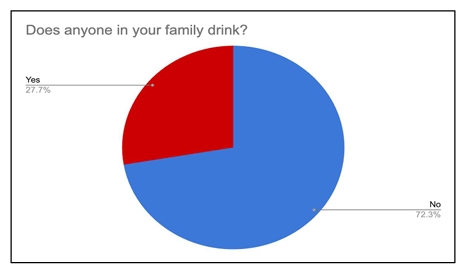
The data suggests that the majority of handloom weavers' families do not have members who drink. This finding could reflect cultural norms, health awareness, or other social factors within the weavers' communities. However, there is still a notable portion whose families do have members who drink, which could warrant further exploration into the social and health implications of this behavior.
If Yes, How often does this affect the family environment?
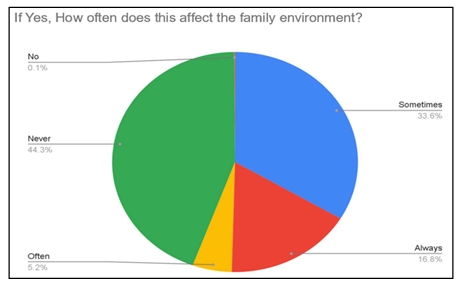
The data suggests that although a noticeable proportion of families sometimes experience negative effects due
to
drinking, the most prevalent situation reported is that drinking does not affect the family environment at
all. This
indicates that, in many households where drinking occurs, it may be practiced in moderation or managed in a
manner that
prevents it from interfering with family harmony and day-to-day functioning.
It may also suggest
that drinking is
infrequent or limited in nature, thereby reducing the likelihood of consistent or severe family disturbances.
However,
the data also reveal that for the families who do experience negative impacts, these effects are not isolated
or
negligible. Instead, they occur with a significant frequency, leading to disruptions in the family environment
and
potentially affecting relationships, emotional well-being, and household stability.
This contrast
highlights
that while
drinking may not be problematic for the majority of families, it can have serious and recurring consequences
for a
smaller segment, underscoring the uneven but meaningful impact of drinking on family life.
Conclusion
Design Modification
The handloom sector in Assam faces several challenges affecting weavers' livelihoods and sustainability. Weaving is the primary income source, but many weavers are dissatisfied with their earnings. Key issues include rising yarn prices, lack of capital for infrastructure, and competition from auto loom products. Technical problems like poor ergonomics and lack of spare parts cause physical strain and operational inefficiencies. Preparatory processes such as winding and warping are also inefficient, impacting fabric quality and productivity.
To address these challenges, targeted interventions are needed. Economic stability and diversification can be
achieved
through skill development and market expansion. Financial assistance programs to increase wages and support
weavers are
crucial. Infrastructure improvements, including upgraded weaving facilities and reliable supply chains for raw
materials, are essential for sustainable growth. Technical enhancements, such as better ergonomics and
availability of
spare parts, can reduce physical strain and maintain production quality.
Health interventions,
including
regular
medical
check-ups and ergonomic training, can improve working conditions. Additionally, optimizing preparatory
processes
with
better techniques and strict quality control measures can enhance fabric quality and reduce material waste.
These
measures can collectively improve economic stability, working conditions, and growth in the handloom sector,
ultimately
enhancing the livelihoods of the weavers.
Dyeing cum Finishing
The examination of dyeing processes among handloom weavers in Assam reveals several key insights into their
practices
and challenges. The weavers utilize a mix of natural and synthetic dyes, with a notable preference for
synthetic dyes
due to their vibrant colors and colorfastness. Yarn dyeing emerges as the primary activity, indicating the
need for
specialized resources and training in this area.
Lighting conditions moderately affect
productivity,
suggesting room for
improvement in workplace environments. The evaluation of dyed fabric predominantly relies on visual
inspection,
underscoring the importance of human judgment in quality control. Additionally, the use of finishing agents
for value
addition varies significantly between different regions, reflecting diverse approaches to fabric enhancement.
To enhance the dyeing processes and overall productivity of handloom weavers in Assam, several targeted
solutions can be
implemented. Training programs focused on advanced dyeing techniques for both natural and synthetic dyes will
improve
skills and adaptability to market demands. Resource allocation should ensure the availability of high-quality
dyes and
equipment, particularly for yarn dyeing.
Upgrading lighting conditions in weaving and dyeing areas
will boost
productivity and reduce eye strain, supported by ergonomic assessments to determine optimal setups.
Introducing tools
and training for systematic evaluation of fastness properties, alongside color evaluation tools to supplement
visual
inspection, will enhance quality control.
Ergonomics
The productivity, general well-being, and working environment of weavers are all greatly impacted by
illumination in
handloom weaving environments. Variations in lighting levels were recorded by weavers throughout the examined
regions,
potentially affecting their productivity and comfort. Headaches, fatigue, and eye strain were rated as
"Medium" to
"High" by most weavers.
As a result of extended exposure to less-than-ideal lighting conditions,
weavers complained of
discomfort in a number of body areas, including the neck, lower back, thighs, waist, ankles, feet, and
shoulders.The
data indicates that noise levels at work are generally moderate, with some lower levels, causing varied
responses in
terms of headaches and discomfort. While many weavers experience little to no fatigue from noise, hearing
problems
caused by noise are quite common. Most respondents find noise levels to be a minor hindrance to their
efficiency, but a
noticeable group feels moderately affected.
Improving lighting and noise conditions in Assam's handloom weaving spaces is essential for the health and
productivity
of weavers. Enhancing natural light, using adjustable LED lighting, and providing task lighting can reduce eye
strain
and headaches. To address noise issues, installing acoustic panels, maintaining equipment, and designating
quiet zones
are effective measures.
Additionally, providing ear protection, conducting regular health
check-ups, and
educating
weavers about ergonomic practices can further mitigate the negative impacts of poor lighting and noise,
leading to a
more conducive and productive working environment.
Technological
In Assam's handloom sector, the most common defects are yarn breakage/snags and uneven dyeing/shading, which
significantly impact product quality, productivity, and market perception. Defective fabrics are typically
sold in the
domestic market or kept for personal use, reflecting a practical approach influenced by economic and
traditional
factors. Many weavers are unaware of the specific defects they often make, suggesting a need for training and
quality
assessment to enhance product quality.
Most weavers do not segregate products by quality or repair
defects,
leading to
potential market inconsistencies and customer dissatisfaction. Furthermore, the majority have not received
special
training to reduce manufacturing defects, highlighting the importance of training programs to improve
competitiveness
and customer satisfaction.
Improving the quality of handloom fabrics in Assam is crucial for boosting product competitiveness, economic
benefits,
and customer satisfaction while preserving artisan skills. Common defects like yarn breakage and uneven dyeing
need to
be addressed through specialized training, quality segregation, defect management, and technical support.
Raising
awareness about defects, conducting regular quality assessments, and providing financial and resource support
can help
weavers produce higher quality fabrics, thereby enhancing their marketability and improving weavers'
livelihoods.
Personalised Support and Counselling
Handloom weavers in Assam face significant pressures from family and work, impacting their productivity and
work
quality. They believe that external support for their children’s care and education would motivate them to
work harder,
improving economic conditions. Despite physical and mental strains, weavers remain optimistic about the
potential of
their work to improve their living conditions. Common health issues like shortness of breath and palpitations
highlight
the need for better working conditions and health monitoring. Regular rejuvenation activities could boost
well-being and
productivity.
While most families do not experience issues from drinking, those who do are notably affected, indicating the
need for
social support systems.
To improve the conditions for handloom weavers in Assam, it's essential to provide external support for
childcare and
education, enhance working conditions with better ventilation and health monitoring, and promote well-being
through
rejuvenation activities. Addressing health issues and establishing social support systems for substance abuse
are
crucial, alongside offering financial incentives and training to boost productivity. Engaging the community in
these
efforts can ensure that solutions effectively address the weavers' needs and challenges.