

Project Associate, NER Project on Handloom
Indian Institute of Technology, Delhi
My area of work in the project involves coordinating field-level implementation and technical trials under the Handloom Research and Development Programme. I support setup modification, installation, assist in dyeing and weaving process evaluations, and collect feedback from weavers to assess usability and performance of the new technology. Additionally, I help document observations and suggest improvements for refining the process.
During my involvement in the project, I had the opportunity to closely interact with traditional weavers and better understand their challenges and strengths. One meaningful insight was how small technical improvements like changes in dyeing conditions or setup design can significantly impact their workflow, comfort, and the final fabric quality. I also learned the importance of clear communication and user-friendly innovations when introducing new technologies to community-based crafts. This experience deepened my appreciation for grassroots-level innovation and the value of combining traditional skills with scientific approaches.
This exposure has significantly contributed to both my personal and professional growth. Professionally, it enhanced my problem-solving skills and taught me how to adapt technical knowledge to real-world, community-based settings. I gained experience in field coordination, hands-on experimentation, and collaborative teamwork with artisans, researchers, and institutions. Personally, it helped me develop greater empathy, patience, and cultural sensitivity while working with traditional weavers. It also strengthened my belief in the importance of sustainable and inclusive development through innovation at the grassroots level.

Senior Research Fellow
under FITT, IIT Delhi
Working as a Senior Research Fellow under FITT, IIT Delhi for the R&D for the Promotion of Handloom in NER (Assam) project has been a truly enriching experience. The project addressed the challenges faced by rural dyers in selling their dyed silks due to inconsistent dyeing quality. My contribution involved designing and fabricating an eco-friendly dye vessel with an energy-efficient Chulla, and developing a prototype warp-stop motion for Handlooms to reduce fabric defects and improve product quality.
Through this project, I gained valuable hands-on experience in problem identification, design thinking, and practical implementation of solutions for the handloom sector. I also learned the importance of collaborating with artisans, understanding their challenges, and translating research into tangible benefits for the community. This experience has broadened my perspective and will guide me in approaching my future research with greater empathy, innovation, and sustainability focus.
I am deeply grateful to Prof. Samrat Mukhopadhyay, the Principal Investigator, for granting me this wonderful opportunity and for his invaluable guidance. I would also like to sincerely thank Prof. Wazid Alli, Prof. Sougata Karmarkar, Mitali Madam, Dhiraj Sir, and the entire project team for their constant support, encouragement, and collaboration throughout my research journey.

Assistant Project Engineer
Research and Development Program for
Promotion
of Handloom in North-Eastern Region (Assam)
During my tenure as an Assistant Project Engineer in the research and development programme for the promotion of handloom in the North Eastern region (Assam), I was responsible for designing a seat suitable for weavers, specifically engineered to be retro- fitted to their existing setups. My chief focus was developing a solution that not only utilizes locally available materials but also enhances the comfort and mobility of handloom weavers, addressing the issue of prolonged discomfort and associated musculoskeletal disorders.
One of the most meaningful insights I gained was through first-hand data collection and direct conversations with the weavers. I saw the physical hardship and chronic discomfort many experience from sitting on thin wooden platforms for six to ten hours a day. This discomfort, particularly the prevalence of lower back pain, emerged as a significant barrier to both their health and productivity. Realizing the direct connection between workplace ergonomics and long-term well-being was a pivotal learning experience for me.
This exposure profoundly shaped my professional outlook. Designing the ergonomic seat not only improved my technical skills but also deepened my understanding of how real- world problems are best addressed through empathy-driven and user-focused design. Interacting with the weavers taught me to value their resourcefulness, resilience, and ability to operate sustainably despite limited resources. The process taught me the importance of involving end-users during problem-solving and how closely observing their routines can inspire effective, context-sensitive solutions. Above all, it reinforced the need to approach the revitalization of culturally significant industries like handloom weaving with both scientific rigor and social sensitivity.

Assistant Project Scientist
R&D Program for Promotion of Handloom in
North-Eastern Region (Assam)
I, Souti Das, worked as an Assistant Project Scientist in the handloom project under the direct supervision of Prof. Sougata Karmakar. My domain of work was to evaluate the drudgery faced by the handloom weavers during weaving and conceptualizing better design intervention to mitigate the chances of musculoskeletal disorders and thereby improving their occupational health and Ergonomics. This project has a pivotal role in my career for multiple reasons. The exposure in the field to assess real-life scenarios in one of the biggest informal sectors in the country has helped me to develop my thinking capabilities as an Ergonomics professional. Utilising various instruments has also developed my practical knowledge to objectively collect and assess various data. The entire process, from identifying challenges to developing feasible solutions, greatly enhanced my problem-solving skills. Beyond the technical aspects, Prof. Sougata Karmakar's mentorship was instrumental in my professional and personal development. I am deeply thankful for the collaborative spirit and active cooperation of the entire team.
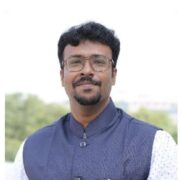
Research Scholar, IIT Delhi
Organic
Dyeing & Finishing,
Handlooms Research
and Development
Project in the NER (Assam)
As part of the Handloom R&D Project (NER), my primary focus was improving and standardizing natural dyeing and eco-friendly finishing processes, especially for Eri silk fabrics commonly used in the Northeastern handloom sector. One of the key issues we observed was the absence of consistent dyeing methods, which often resulted in poor colorfastness and limited awareness about the added value that natural functional finishes can bring. I gained valuable insights into their traditional dyeing practices through field visits, surveys, and hands-on work with local artisans. It was eye-opening to see how rich their knowledge is, yet how much potential there is to combine it with scientific techniques to create more sustainable and reliable methods. Collaborating with these communities to develop solutions that improve the look and feel of fabrics and reduce environmental impact was truly fulfilling. This project also allowed me to connect my biomolecule extraction and textile application research with real-world challenges. It taught me the importance of context—what works in a lab needs to be adapted thoughtfully on the ground. The experience reinforced my commitment to use innovation in ways that directly benefit rural artisans, and to help spread awareness about market trends and sustainable practices. Being part of this initiative has been an enriching journey and a small but meaningful step toward supporting India’s incredible handloom heritage.

Junior Research Fellow
I was a part of the Handloom R&D Project as a Junior Research Fellow from October 2023 to February 2024. My primary area of work focused on optimizing natural dye recipes, where I worked on identifying suitable parameters such as time and temperature for improved dye uptake and color fastness on handloom silk fabrics.
One of the most meaningful aspects of this experience was engaging directly with local dyers and understanding their traditional dyeing practices. Collaborating with them helped me bridge the gap between scientific methods and indigenous knowledge systems. It was rewarding to see how small refinements in technique could support both aesthetic outcomes and process sustainability.
This exposure has significantly shaped my perspective as a researcher. It reinforced the importance of field engagement, empathy, and adaptability in real-world problem- solving. Personally, it deepened my appreciation for the cultural and ecological richness of the North Eastern dyeing and weaving communities, and professionally, it has motivated me to pursue more practice-oriented, community-linked textile research in the future.

M.Tech Student, Textile Chemical Processing
Indian Institute of Technology, Delhi
“My area of work in the project involves designing and optimizing a dyeing machine specifically for the handloom sector under the Handloom Research and Development Programme. The focus of my work is to simplify, adapt, and make advanced dyeing technology more useful and accessible for traditional weavers. By extracting ideas from trending machine innovations and reshaping them to suit the needs of the handloom sector, I aim to create a practical, sustainable, and impactful solution.
Having pursued My B.Tech in Textile Chemistry from UPTTI, Kanpur and now M.Tech in Textile Chemical Processing at IIT Delhi, with Dyeing as my primary subject of interest, I have combined academic learning with hands-on experimentation. This project has given me the opportunity to apply my knowledge directly to grassroots challenges, where every design improvement has the potential to make a meaningful difference in the workflow, efficiency, and fabric quality for artisans.
Professionally, this experience is enriching my technical and problem-solving abilities, especially in machine design and process optimization. It is also helping me adapt modern technology to real-world contexts where resources are limited but creativity is abundant. Personally, I have developed a deeper sense of empathy and responsibility toward the handloom community, while strengthening my belief in the power of sustainable, inclusive innovation. I am motivated to continue contributing my skills and knowledge to support the growth and resilience of the handloom sector.”
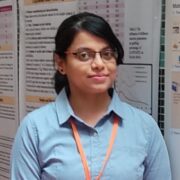
As a contribution to the Handloom R&D Project (NER), my work focused on standardizing natural dye recipes to achieve a variety of attractive shades and optimizing the extraction and dyeing processes. Since ensuring consistency and durability in natural dyeing is particularly challenging, this project has made a significant contribution to supporting local dyers.
Through this project, I gained a deeper understanding of the growing global demand for natural dyes and their sustainable impact. This experience further inspired me to explore other biomolecule-based dyes and their potential applications. Improving the fastness properties of the dyed fabric while maintaining persistent eye-catching shades by keeping the feasibility and simplicity method in mind was a tough challenge. This experience taught me how to approach and solve problems using the most practical methods.
I am deeply grateful for the opportunity to contribute to this community and the handloom sector.